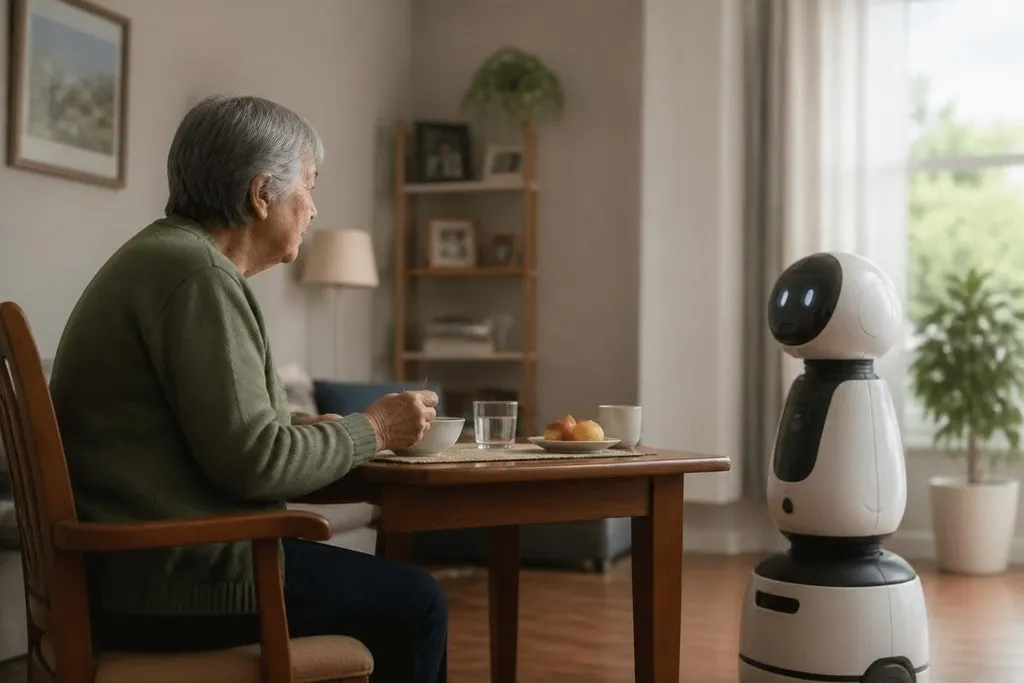
A companion robot may speak with someone at breakfast, remind them about a family call, or guide a short activity. That could make an empty room feel less empty, but the value depends on what happens after the robot starts talking.
Quick read
- Conversation can fill quiet parts of the day
- A robot can prompt contact with family, carers, or friends
- Long-term effects on loneliness still need careful testing
What a companion robot can do
Loneliness often arrives during small gaps: after work, before sleep, or when a person has no one nearby to call. A robot with speech, a screen, and simple movement can respond during those gaps without asking another person to be available at that exact moment.
That response may take several forms. The robot can ask about a planned task, play music, read a message aloud, or remind someone to contact a relative. These actions don’t create a friendship, but they can give shape to a quiet part of the day.
The design matters more than a friendly face. A useful system needs to remember agreed routines, answer clearly, and stop when the person wants silence. If it repeats the same phrases or misunderstands basic requests, the conversation becomes another chore.
The human link still matters
A robot can start a social routine, but people need to decide where that routine leads. A reminder to call a daughter has a different effect from a robot that keeps the conversation inside the device.
This is where the product’s purpose should stay clear. The robot can prompt a video call, help someone prepare a message, or alert a carer when a person asks for help. It shouldn’t present its own responses as equal to care from a person who knows the user.
A companion robot’s place in care depends on the record around each interaction: who started it, what the robot said, and when a person stepped in. Robot24.com companion robot coverage can place those details beside the named system and test setting. That record leads to the harder question of what still needs proof.
What still needs proof
A warm voice can make a first conversation easier, but that doesn’t show a lasting change in loneliness. Any serious trial should check what people do after the robot speaks with them, not only how long they use the system.
Useful measures could include the number of calls started each week, time spent in face-to-face contact, missed appointments, and a regular loneliness survey.
The trial should also record when people stop using the robot and why. A device that works for four days and then sits on a shelf has a different result from one used for six months.
Privacy needs the same care. A companion robot may collect speech, movement data, schedules, or messages. People should know what the robot stores, where the data goes, and who can review it before the device enters a home.
A practical buying checklist
Before choosing a companion robot, check these points:
- Set the purpose: decide if the robot is for conversation, reminders, calls, or another task.
- Test the exit: confirm that a person can mute the microphones, stop the camera, and shut down the robot without help.
- Check the contact path: see if it can reach a named relative, carer, or service when the user asks for help.
- Read the data rules: find out what gets stored, how long it stays there, and who can access it.
- Plan a review date: compare use after 7 days, 30 days, and 90 days with the goal set at the start.
The strongest case is for a robot that helps a person reach other people. I'd skip any product that tries to hide its limits behind a human-like voice.
The next useful test is simple: after 90 days, does the person have more contact with people, or only more time speaking to a machine?